
Top story
The robots, research and real-world breakthroughs worth watching.
Feeds refreshed every 15 minutes
How to choose a BLDC motor for robotic arms and mobile robots (opens in a new tab)
Several factors, from sensors to safety and robotic arms or mobile platforms, help determine the selection of a brushless DC or BLDC motor. The post How to choose a BLDC motor for robotic arms and mobile robots appeared first on The Robot Report.
Read original (opens in a new tab)
Robots Explore Whole-Arm Touch, Water Access and Warehouse Tasks5 stories · Summaries & our takeClose briefing
From demonstration to deployment.
A tactile robotic arm and a platform designed to reach remote waters highlight engineering capabilities. Warehouse automation, obstacle-crossing research and border flight restrictions add practical questions about tasks, deployment conditions and operating access.
Tech Xplore reports that HKUST researchers developed EmArm, a robotic arm with whole-arm tactile sensing and adaptive manipulation. Its design embeds soft optical tactile skin directly into the robotic skeleton.
Our take Sensing contact across an arm could matter for manipulation involving more than the gripper. This is a research system; task-level demonstrations would help establish when its tactile design makes adaptive handling useful.
Tech Xplore · Source published
Read the source at Tech Xplore (opens in a new tab)New Atlas reports a robotic platform created for monitoring remote waters, using a morphing wing-sail to combine aerial descent with sailing. The researchers describe the design as supporting rapid placement and extended monitoring.
Our take Combining arrival by air with movement on water addresses a concrete access problem for monitoring teams. The report describes a developed platform, while sustained field operation under relevant water and weather conditions remains unestablished.
New Atlas · Source published
Read the source at New Atlas (opens in a new tab)Automated Warehouse reports that ISD has introduced a robotic cell combining palletizing and depalletizing. ISD says the system handles outbound stacking and incoming unloading while reducing labor costs, floor space and payback time.
Our take Warehouse planners could assess whether one cell suits both incoming and outgoing tasks at their facility. The savings are vendor claims; an installation handling representative loads would make the operational case more concrete.
Automated Warehouse · Source published
Read the source at Automated Warehouse (opens in a new tab)New Atlas reports a wound-helix robot that jumps over obstacles. The research coverage relates its movement to the familiar mechanism of twisted rubber bands releasing stored energy and making objects hop.
Our take Obstacle crossing gives this research mechanism a concrete mobility task to assess. The useful next evidence would show whether jumps can be directed and repeated across defined obstacles, beyond establishing that the robot can leap.
New Atlas · Source published
Read the source at New Atlas (opens in a new tab)DroneLife reports that federal agencies announced new drone flight restrictions along the U.S.-Mexico border. The restrictions aim to counter unauthorized drone activity and protect border security operations while limiting nearby civilian flights.
Our take For civilian drone operators, this affects where a mission can be planned regardless of aircraft capability. Teams considering border-area work should check the applicable airspace restrictions before committing to a flight location.
DroneLife · Source published
Read the source at DroneLife (opens in a new tab)
Latest news
Page 1 of 18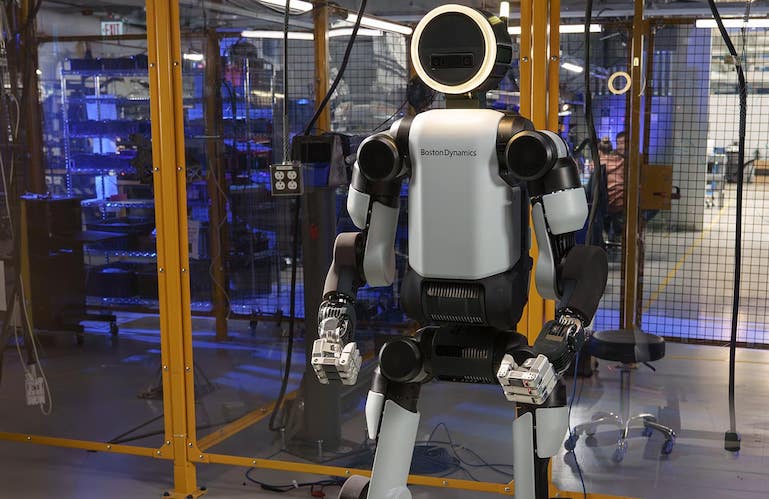
The rise of the machines is canceled: Why humanoids with AI are helpers, not enemies (opens in a new tab)
Humans play a key role in developing humanoid robots and training AI models, so we can maintain control, writes a columnist. The post The rise of the machines is canceled: Why humanoids with AI are helpers, not enemies appeared first on The Robot Report.
Read story (opens in a new tab)
Team develops embodied robotic arm 'EmArm' with human-like touch sensing (opens in a new tab)
A research team at The Hong Kong University of Science and Technology (HKUST) has developed an Embodied Sensorimotor Robotic Arm (EmArm) capable of whole-arm tactile sensing and adaptive manipulation. By embedding a soft optical tactile skin directly into a robotic skeleton and…
Read story (opens in a new tab)
ISD combines palletizing and depalletizing into a single automation cell (opens in a new tab)
ISD says its new robotic system stacks outbound pallets and unloads incoming ones, cutting labor cost, floor space, and payback time. The post ISD combines palletizing and depalletizing into a single automation cell appeared first on Automated Warehouse.
Read story (opens in a new tab)
Why opportunity charging is winning as robot fleets scale (opens in a new tab)
Ben Waters explains why opportunity charging is becoming essential for keeping autonomous robot fleets moving, scalable, and operationally efficient. The post Why opportunity charging is winning as robot fleets scale appeared first on The Robot Report.
Read story (opens in a new tab)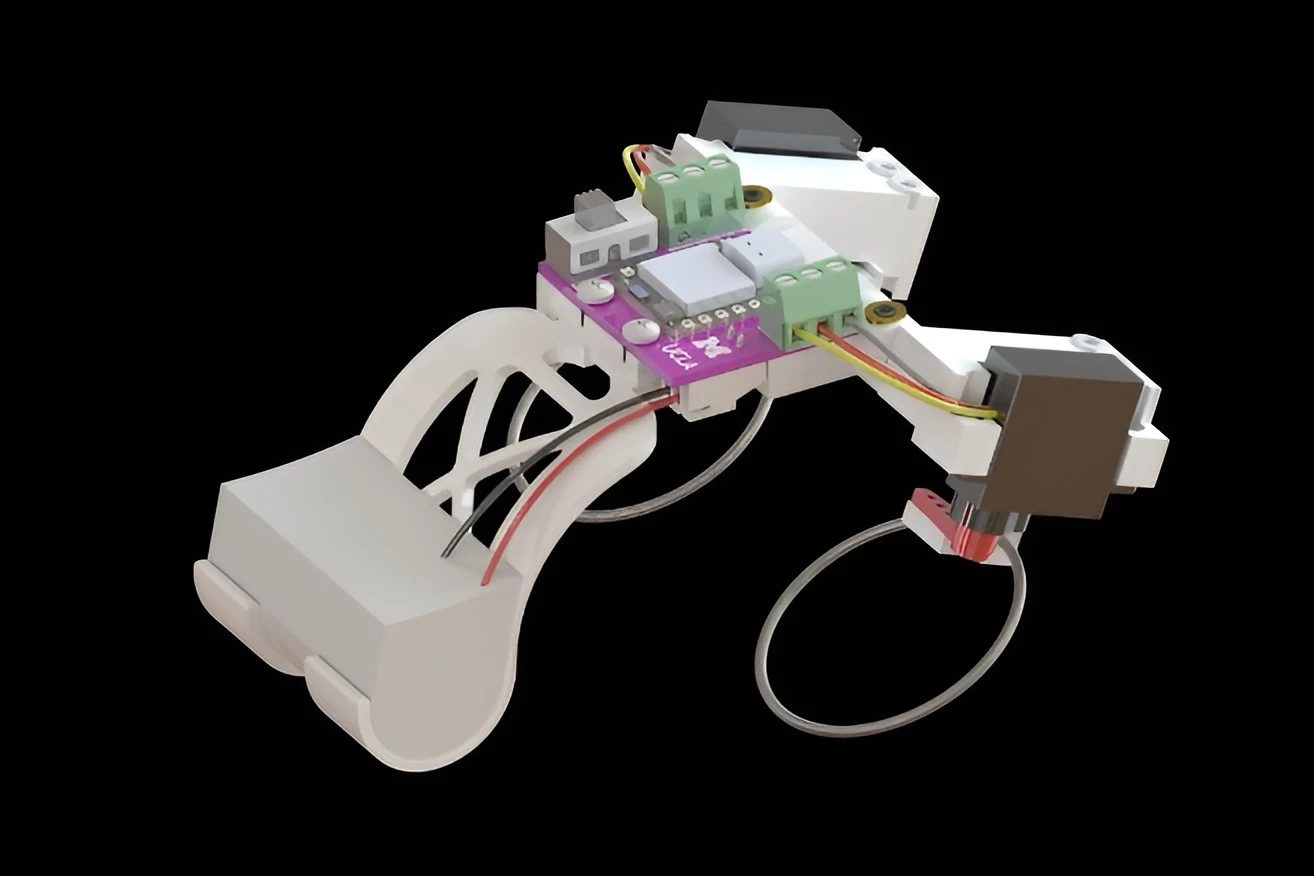
Wound-helix robot leaps and bounds over obstacles (opens in a new tab)
Remember that “dancing pencils” game schoolchildren played, where they passed two pencils through a small rubber band, twisted them repeatedly, and then let go to make the pencils jump around as the band unraveled? Turns out they were onto some serious futuristic robotics, as sc…
Read story (opens in a new tab)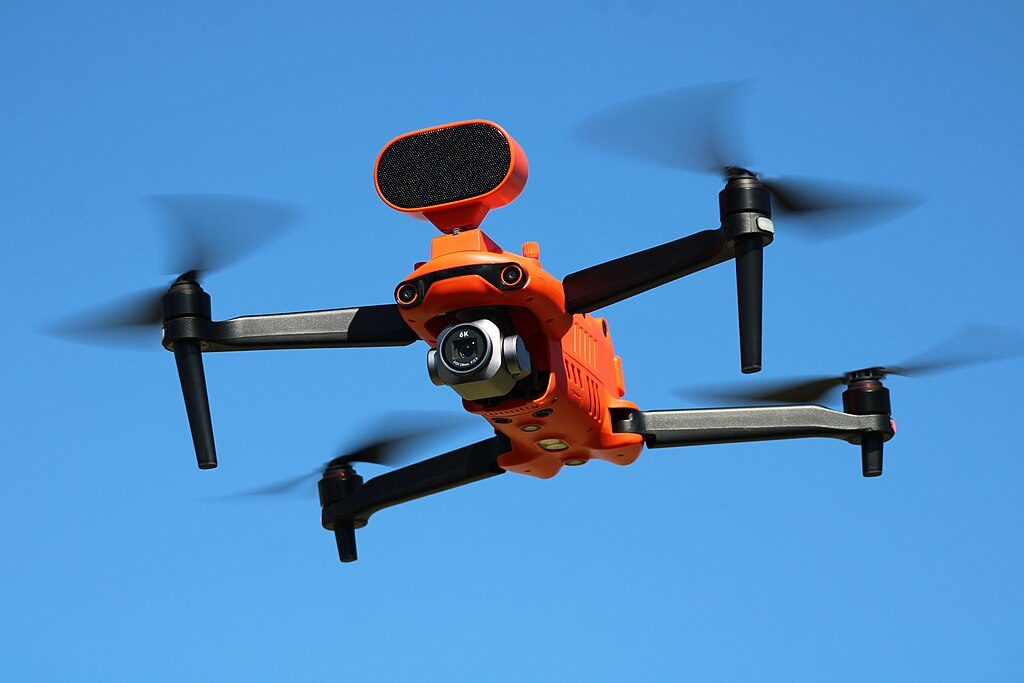
Senator Cites Classified Security Findings in Defense of DJI and Autel Restrictions (opens in a new tab)
New FCC filings highlight company-specific national security concerns alongside broader supply chain risks behind the original Covered List decision. Senator Rick Scott has challenged arguments from DJI and Autel Robotics against their inclusion on the Federal Communications Com…
Read story (opens in a new tab)Sources 18 publishers
Headlines link to the original reporting. Article dates show publication time; the refresh time shows when feeds were last checked.
- Medical Xpress (opens in a new tab)
- Nature: npj Digital Medicine (opens in a new tab)
- Nature: ageing research (opens in a new tab)
- NVIDIA Technical Blog (opens in a new tab)
- AMD Newsroom (company announcements) (opens in a new tab)
- Anastasi In Tech (video reports) (opens in a new tab)
- PRO ROBOTS (video reports) (opens in a new tab)
- IEEE Spectrum (opens in a new tab)
- TechCrunch (opens in a new tab)
- The Robot Report (opens in a new tab)
- Robotics & Automation News (opens in a new tab)
- Automated Warehouse (opens in a new tab)
- MIT News (opens in a new tab)
- Tech Xplore (opens in a new tab)
- ScienceDaily (opens in a new tab)
- New Atlas (opens in a new tab)
- Hackaday (opens in a new tab)
- DroneLife (opens in a new tab)